The MCA Green and Arts Alley
In Perpetuity Project, publicly launched on September 15, 2026.
Green Arts Alley
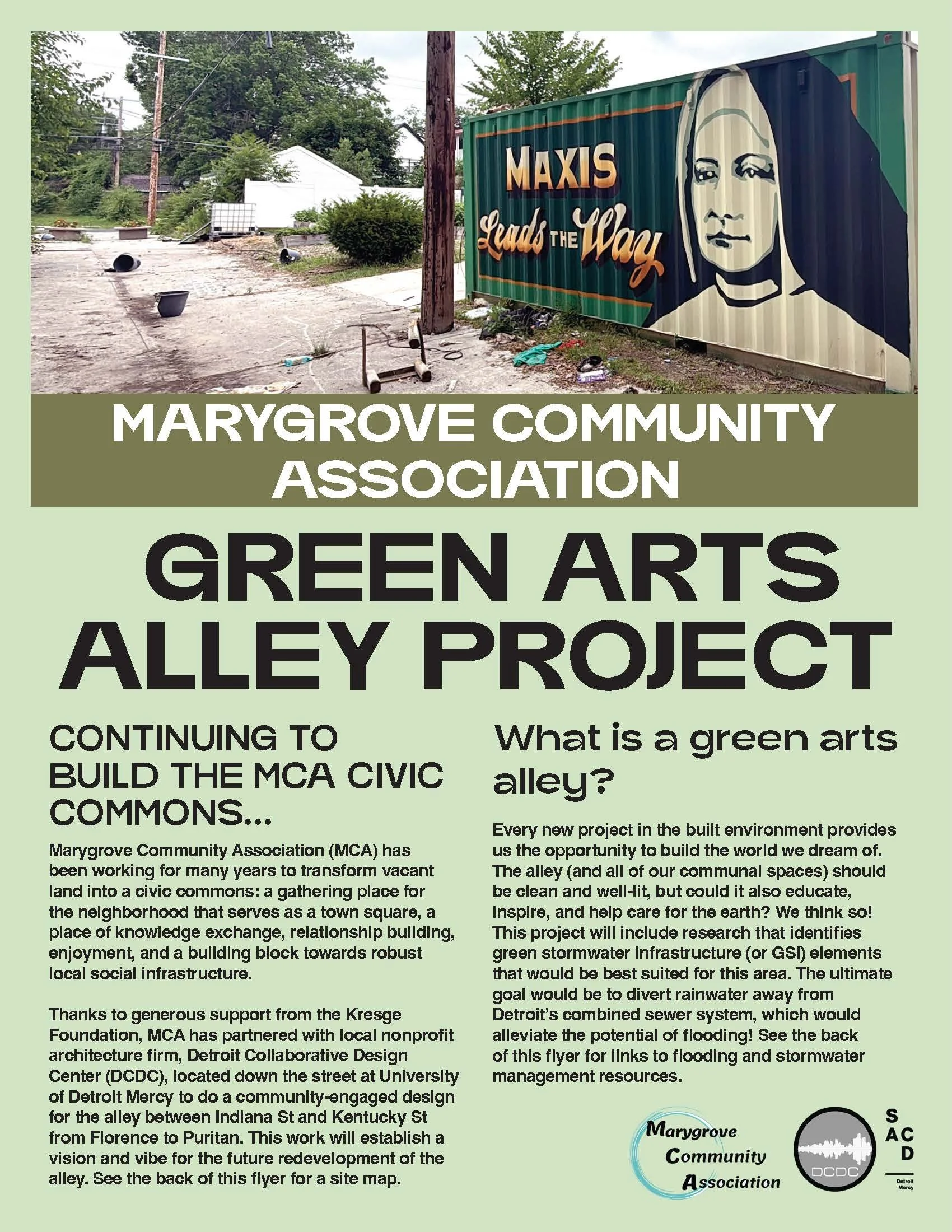
Bringing color, art, and community to Theresa Maxis Way
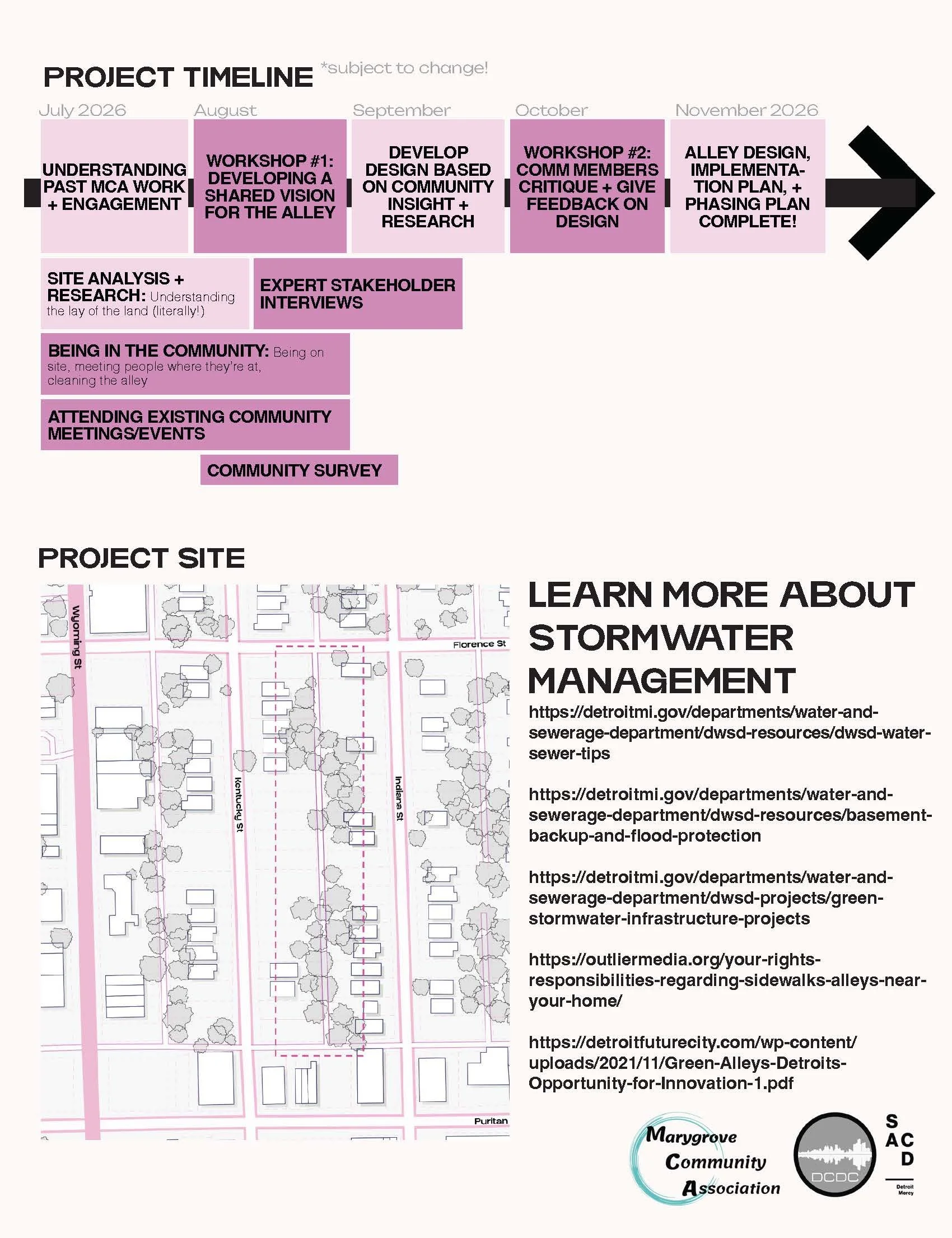
The Marygrove Community Association is transforming a stretch of alley from Indiana Street Garden to Huntington Community Park into a vibrant, welcoming corridor for the Fitzgerald–Marygrove community, named Theresa Maxis Way, in honor of Mother Theresa Maxis. This project brings together public art, green space, and neighborhood history in one connected walkway, reflecting what makes our neighborhood special: creativity, resilience, and deep community roots.
What's Happening
Community-Led Design
A Design Subcommittee of local residents, chaired by MCA Board member Jasmine Paulk, is helping shape the vision for the corridor. We've partnered with the Detroit Collaborative Design Center (DCDC) at the University of Detroit Mercy School of Architecture and Community Development to bring professional design expertise to community ideas.
Public Art & Storytelling
The heart of the Green Arts Alley is two linked stories, one nearly two centuries old and one unfolding today, tracing a line of Black educational leadership.
The alley will feature a multimedia art installation titled In Perpetuity, which includes a striking shipping container installation honoring Sister Theresa Maxis, the corridor's namesake, a free Black woman from Baltimore who co-founded the Sisters, Servants of the Immaculate Heart of Mary (IHM) — the order that later established the former Marygrove College. In the present day, a digital story map and oral history archive pair portraits taken by Marygrove College alumna, artist, and photographer Naomi Tajonera-Huffman with testimonials from Black educators who've lived or worked in Fitzgerald.
These stories converge in a permanent public art installation created by Tiff Massey, the project's Art Lead and a commissioned sculptor known for large-scale public works centered on Detroit and Black cultural history.
Through oral histories, storytelling, public art, and placemaking, this community-led project preserves Black educational history in Fitzgerald–Marygrove — the people, places, and events too often left out of Detroit's revitalization story.
A Legacy of Sustainability
The Theresa Maxis Way Green Arts Alley carries forward a tradition of environmental stewardship rooted in the corridor's own namesake. The IHM Sisters — the order Theresa Maxis helped found — became national leaders in ecological consciousness, committing in 2000 to "developing and acting out of an ecological consciousness" and endorsing the Earth Charter in 2004. Their Monroe motherhouse, renewed with geothermal heating and water reclamation systems, became a model of sustainable living, and their St. Mary Organic Farm has taught sustainable land practices for decades.
That legacy lives on in the corridor itself. By linking Indiana Street Garden to Huntington Community Park through green infrastructure and public space, the Green Arts Alley aligns with MCA's broader commitment to caring for land, alongside projects such as the Kentucky Street Wildflower Meadow and the MCA Conifer Arboretum. Together, they root a legacy of ecological consciousness — one Sister Theresa Maxis's own order helped pioneer — in Fitzgerald–Marygrove's soil.
Our Work with Detroit Collaborative Design Center, University of Detroit Mercy School of Archeticture and Community Develpment